Ukraine

Dmytro Yagunov: Prison Subculture or National Prison Culture. Importation of Russian Neocolonial Narratives in the 21 Century
The article is focused on the origins of Russian criminal and prison subculture and the current state of this phenomenon, which is imported by the Russian Federation within its imperialistic neocolonial policy aimed at restoring the ‘Soviet space’. In order to analyse the preconditions for the emergence of the Russian criminal and prison subculture, it…

The Colonial Legacy of the “Wagner State” and the Destruction of the Russian Cultural Code
By creating a giant colony beyond the Urals, unparalleled in world history, and populating it mainly with criminal elements, the Muscovite Tsardom and the Russian Empire laid a time bomb not only under their economy, but also under the very cultural code of the country. This mine has already exploded several times and continues to…

‘Zhigany’ and “Urki”: From the White Guards to ‘Thieves-in-Law’
The modern self-designations of ‘thieves’ such as ‘law-abiding’, ‘lawful thieves’, and ‘thieves-in-law’ also originate from the pre-Revolutionary subculture of the ‘vagrants’. The category of a ‘vagrant-lawyer’ was popular among prisoners back in the 19th century. A ‘vagrant-lawyer’ was well versed not only in the laws of the Russian Empire, but also in ways to circumvent…


Dmytro Yagunov: Informal prison hierarchies in the 21 century: subculture, trends and social control (The 2025 Annual Conference of the European Society of Criminology)
In this study, we raise the issues of the origins of Soviet criminal and prison subculture, the corresponding informal prisoner hierarchies, and the current state of this social and cultural phenomenon in post-Soviet states. Accordingly, we raise questions about the historical origins and preconditions for the formation of the phenomenon, which continues to influence the…

Dmytro Yagunov: The Wagner Phenomenon: Russian Neo-Imperialism and the Importation of Prison Subculture
The issue of Russian criminal and prison subculture and its spread is by no means historical or criminological in nature. In fact, assessing Russian criminal and prison subculture solely within the framework of historical science or criminology deprives researchers of the opportunity to analyse the essence of this phenomenon. Having shed the prefix ‘sub’, Russian criminal and…

Impact of Russian Prison on Ukrainian Language
One of the most striking examples of the influence of pre-revolutionary Russian prison subculture on post-Soviet culture is probably the word ‘loch’, which was widely used long before the 1917 revolution throughout Russia, especially among convicts and prisoners. This word is mentioned by the well-known researcher of Russian penal servitude, Sergei Maksimov, in his book…

Tinatin Uplisashvili: The Shadow Сode – How Informal Prison Pierarchy Undermines Human Dignity Across Post-Soviet Prisons
In this expert blog, PRI’s Tinatin Uplisashvili explores the persistence of informal prison hierarchies across post-Soviet penitentiary systems, structures that continue to shape prison life through violence, social exclusion and informal authority. Drawing on recent reports by the European Committee for the Prevention of Torture and long-standing documentation from multiple countries, the blog analyses how caste-based…
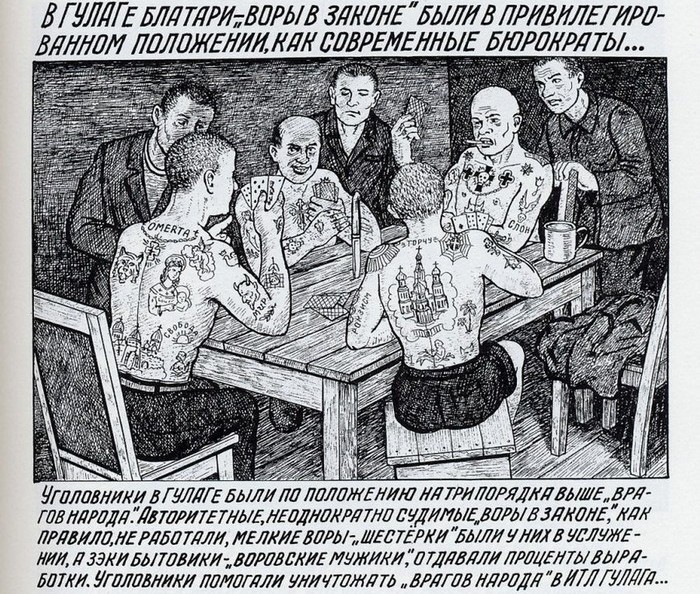
Неформальна ієрархія ув’язнених. Prison Standard. CPT/Inf (2025)12 (неофіційний переклад Дмитра Ягунова)
У цьому документі ЄКЗК викладено його міркування та стандарти щодо проблеми сучасної неформальної ієрархії ув’язнених. Це явище продовжує існувати, хоча і з різним ступенем проявів, у пенітенціарних системах дев’яти держав-учасниць Європейської конвенції про запобігання катуванням та нелюдському або такому, що принижує гідність, поводженню чи покаранню, вісім з яких є державами-членами Ради Європи. Усі дев’ять країн…

New Algorithm to End Discrimination Among Prisoners (the Ukrainian Prison Service, document)
Following a visit to Ukraine in 2023 by a delegation of the CPT, one of the violations identified was the need to eradicate criminal subculture and hierarchy. In particular, it was stated that in the Public Institution ‘Starobabanivska Correctional Colony № 92’ representatives of the so-called ‘lower caste’ of convicts were rejected by the majority of convicts. They were…