 2
2
 0
0
Ten years ago, El Salvador was the most dangerous country in the world. The authorities declared war on street and prison gangs, and the murder rate fell 50-fold. 1.3% of the country’s population was sent to prison. Many ended up there without trial – and with no hope of ever being released.
In February 2025, the administration of US President Donald Trump signed an agreement with El Salvador to deport migrants and criminals to El Salvador, regardless of their citizenship (including US citizens). In the mid-2000s, El Salvador was the country with the highest murder rate in the world, but in ten years, the authorities managed to reduce this figure by 50 times, not least thanks to extremely harsh policies, including mass raids, arrests without trial and detention based solely on appearance.
The root causes of the high crime rate and the enormous influence of gangs in El Salvador lie in the civil war that lasted from 1979 to 1992. As a result of the fighting, which killed more than 75,000 people, more than a million Salvadorans became refugees. Many of them ended up in Los Angeles. At that time, there was a high level of crime, and in many poor neighbourhoods of the city, the streets were controlled by ethnic gangs, consisting mainly of Mexicans or African Americans.
Upon arriving in Los Angeles, Salvadorans formed their own ethnic gang to protect themselves from criminals, which was named Mara Salvatrucha, or MS-13. It quickly gained momentum and soon became actively involved in a war with other gangs for control of city neighbourhoods and drug trafficking.
At the same time, Salvadorans also began to join the Barrio 18 gang. Created in the 1970s, it was initially exclusively Mexican, but later began to recruit immigrants from all Central American countries. These two gangs became bitter enemies on the streets of Los Angeles.
After the end of the civil war in El Salvador, the United States began deporting Salvadorans back to their homeland. The authorities tried to expel people associated with street crime first. Many members of MS-13 and Barrio 18 were deported. As a result, thousands of criminals found themselves in a devastated country with a weak government and weak law enforcement, where there were few prospects for a peaceful life, but there were a lot of weapons left over from the civil war.
Former gang members from Los Angeles, who had serious experience of real confrontation with the authorities and competitors, quickly took control of the streets. The growth of the groups was facilitated by the active recruitment of children from the age of ten.
By the 2000s, the number of active members of MS-13 and Barrio 18 was estimated at around 10,000 each, accounting for about 0.5% of the total population of El Salvador.
Several tens of thousands more people, who were not members of the gangs, provided them with assistance. The groups fought each other for resources and territory with extreme brutality, even compared to Mexican cartels and groups from neighbouring countries.
In the 2000s and 2010s, the Salvadoran authorities fought the gangs using a variety of methods. They preferred mass arrests and harsher punishments for links to gangs, but the gangs responded with even more violence on the streets. The number of murders in El Salvador in the 2000s never fell below 50-60 per 100,000 people.
The government periodically tried to negotiate with criminals. For example, in 2012, with the mediation of the Catholic Church, the authorities concluded an unofficial ‘truce’ with MS-13 and Barrio 18: in exchange for easing the regime of detention of gang leaders in prisons and investing in disadvantaged areas, the groups promised to stop the killings.
The level of violence did indeed fall, with the number of murders dropping by two to three times, but in practice, the gangs used the relaxation of control by the authorities to strengthen their own influence. In 2014, amid international pressure and ambivalence within El Salvador itself, the ‘truce’ ended. MS-13 and Barrio 18 responded with a wave of violence, and in 2015, the murder rate reached 107.6 per 100,000 people. The country ranked first in the world in terms of this indicator.
In 2019, Nayib Bukele was elected president of El Salvador. He initially tried to tackle crime by holding secret talks with MS-13 and Barrio 18. The government again promised to ease prison conditions and reduce pressure on gang leaders.
However, amid criticism of the secret negotiations, Bukele abruptly changed his strategy. This was triggered by events in March 2022, when 87 people were killed in the country in three days. The authorities introduced a state of emergency (initially for one month, but it has since been extended more than 30 times), after which they announced the launch of an unprecedented campaign, which in its severity far exceeded all previous attempts to resolve the issue by force. As a result, by the beginning of 2023, more than 60,000 people had been arrested.
The state of emergency allowed the government to restrict the rights of those suspected of gang involvement to legal defence and privacy of correspondence, as well as to detain them without trial for 15 days on formal grounds (and often without any grounds at all).
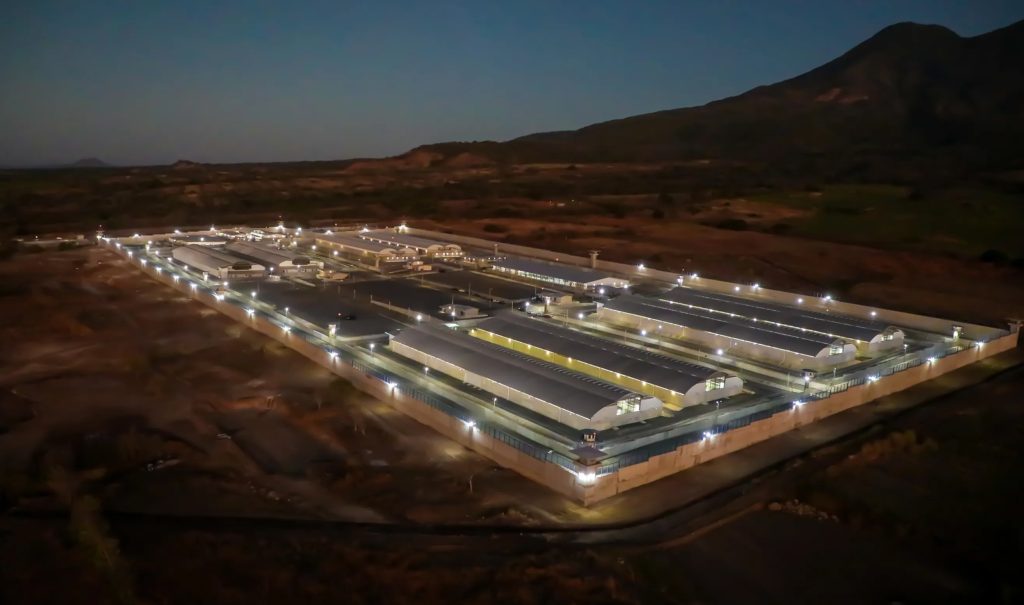
In August 2022, Bukele announced the construction of a new prison for 40,000 inmates. It was ready in less than six months. This prison became a symbol of the government’s new war against gangs. Neither in El Salvador nor anywhere else in the world had prisons with such a high level of security been built before. The authorities repeatedly assured that it was impossible to escape from there and emphasised that none of the prisoners who ended up there would ever be released: according to Bukele’s government, everyone who ended up there must remain there for the rest of their lives.
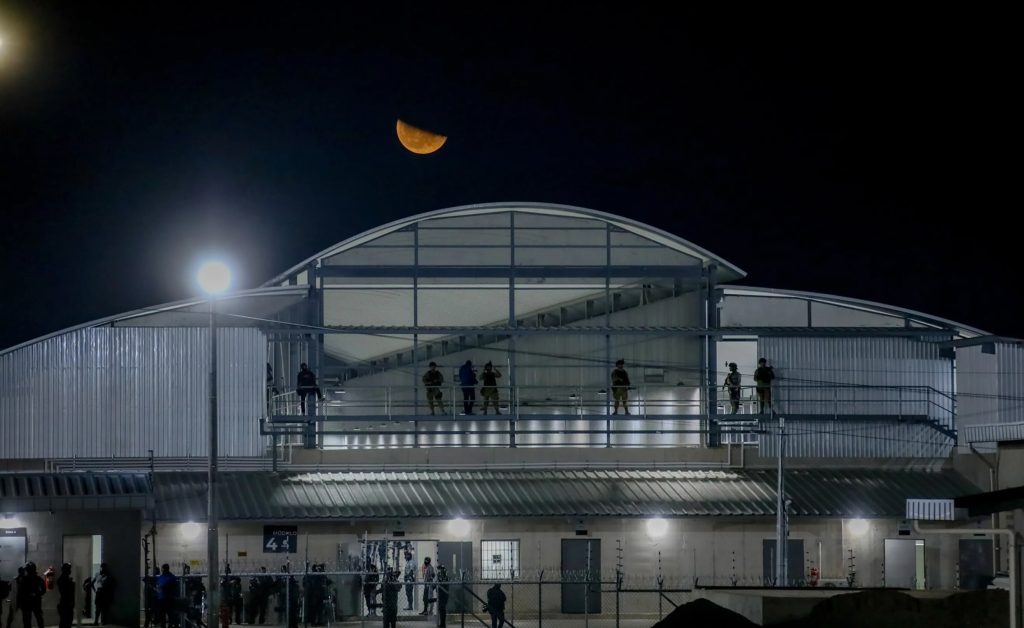
The prison, officially named the Terrorist Detention Centre (Centro de Confinamiento del Terrorismo, CECOT), is located in a sparsely populated mountainous area in central El Salvador. The complex itself covers an area of 23 hectares, with a further 140 hectares of surrounding land under constant surveillance. The complex is rectangular in shape, surrounded by 11-metre-high concrete walls topped with barbed wire and motion sensors. At the time of its opening, there were eight hangars with cells enclosed by their own walls.
Initially, the prison was designed to hold 20,000 people, but its capacity was later increased to 40,000. The current number of prisoners is unknown. The last time the authorities officially announced the number (14,532) was in June 2024, and later the exact figures were not disclosed, allegedly for security reasons. In April 2025, the prison chief said that the number of prisoners was ‘approaching’ the maximum possible.
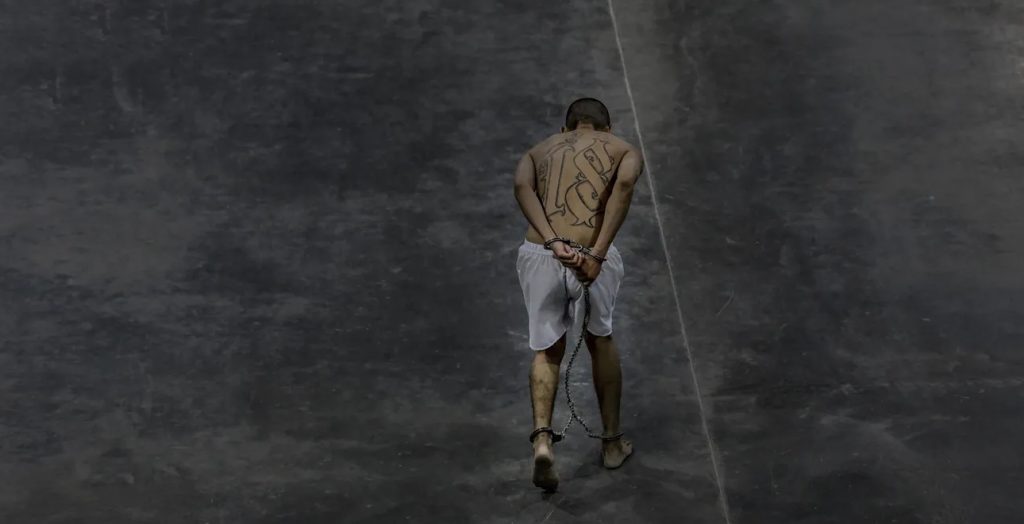
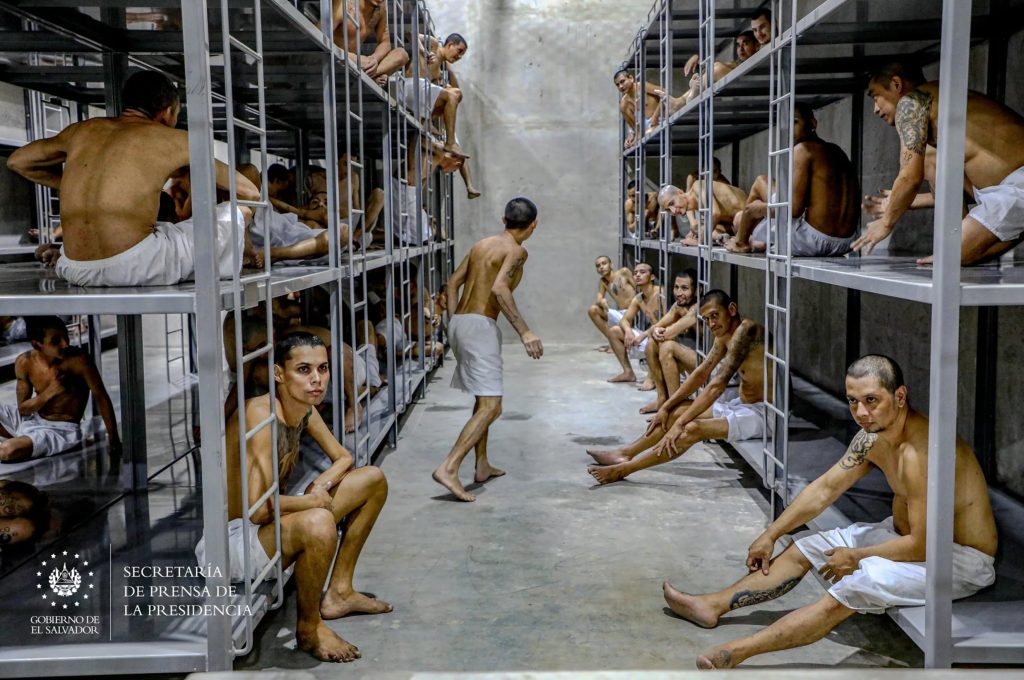
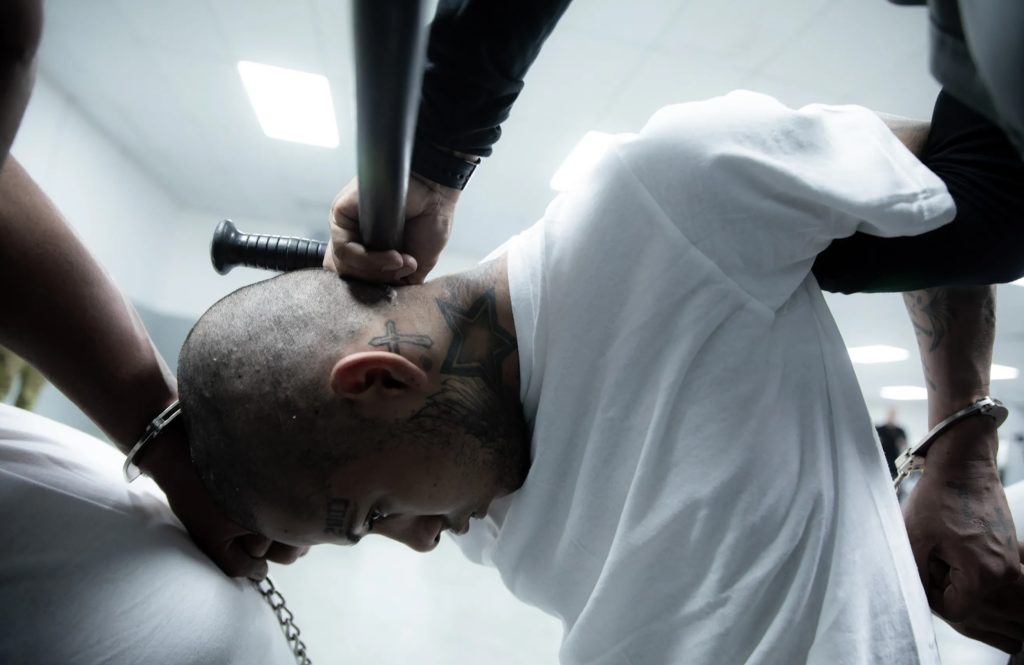
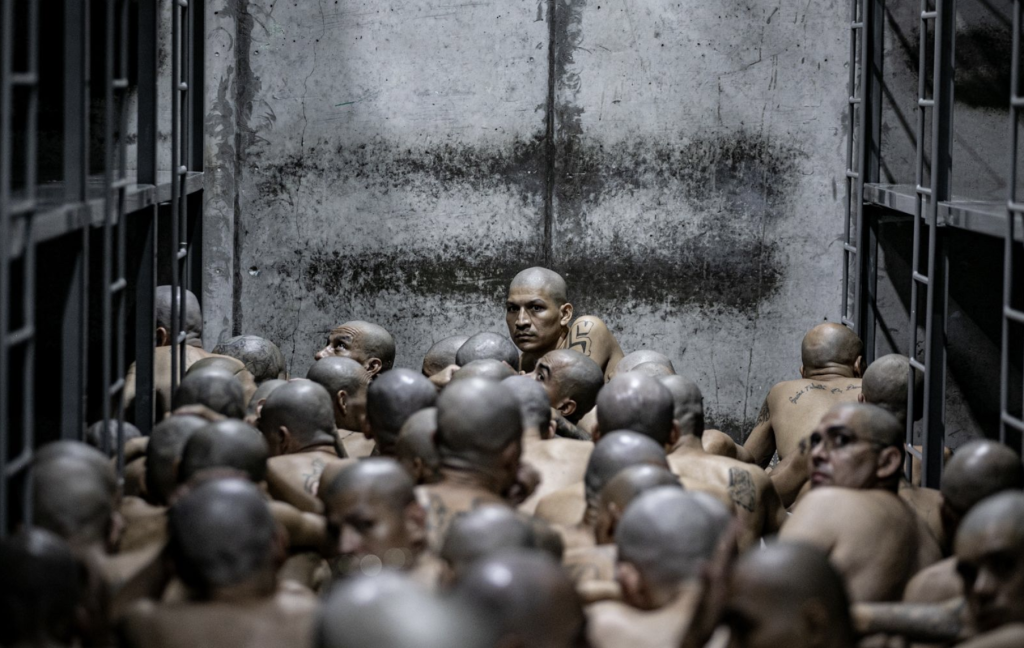
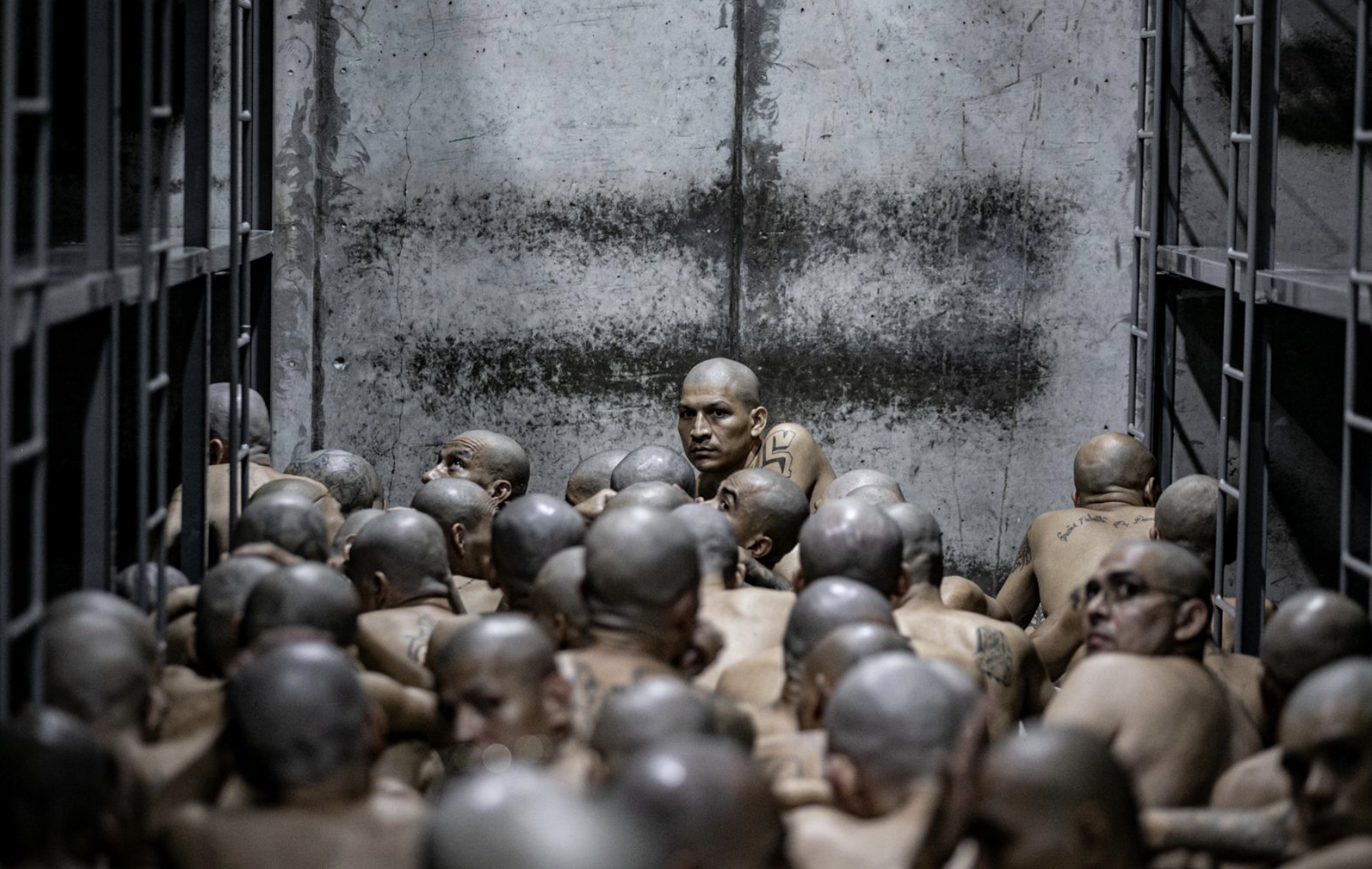
Prisoners are held in shared cells that can accommodate up to 150 people. Each cell has rows of four-tier beds, two sinks and two holes in the floor. A fundamental innovation introduced by the authorities is that members of rival gangs are distributed randomly among the cells. All prisoners wear identical white shorts and T-shirts, and their heads are shaved every five days.
Prisoners spend 23.5 hours a day in their cells, during which time they can only stand or sit on their beds. The lights are never turned off, even at night, and the cells are under 24-hour video surveillance. Every day, prisoners are taken out into a common corridor for half an hour, where they do physical exercises on command or listen to sermons by a priest. They do not leave the hangar – President Bukele has specifically emphasised that the criminals will not see ‘a single ray of sunlight’.
Each of the 150 inmates is given two Bibles, and no other items are allowed. Prisoners are not allowed to have any personal belongings, including books, writing materials or paper. Talking is not prohibited, but attempts to establish a hierarchy or pass messages within the block are punished.
Every day, prisoners receive the same food. This consists of rice, pasta or legumes, as well as water and tortillas. They are never given meat – according to the authorities, this is done deliberately to avoid talk that criminals are eating better than ordinary citizens at the expense of the state. All food is packed in plastic containers and eaten with the hands, as cutlery is prohibited.
Consultations with lawyers take place in separate rooms in the same building; from there, prisoners participate in court hearings via video link. Contact with the outside world is extremely limited. Formally, prisoners have the right to correspond, but in practice such permits are rarely granted, all letters are subject to strict censorship and are often simply not sent to the addressee. Personal visits by relatives are sometimes allowed in exceptional cases, for example, if a prisoner is seriously ill or dying. Officially, this is justified by the need to prevent the transfer of information from gang leaders to the outside world.
Interaction between prisoners and guards is also kept to a minimum. Cell doors are opened only from the command post, which is located in a separate building. There are several hundred guards in the prison, as well as military and police officers on duty outside. All of them undergo a thorough search at the beginning and end of their shift.
Prisoners who fail to comply with the rules are sent to solitary confinement for up to two weeks. There they sit in complete darkness – the only source of light is a hole in the ceiling a few centimetres in diameter. The cell has a concrete sink, a toilet and a concrete slab for a bed. Food is delivered to those in solitary confinement through a slot in the door.
Collective punishment is also used in the prison: for example, if one prisoner breaks the rules, the entire cell may have their food rations restricted.
In total, as part of the war on gangs, the authorities have arrested more than 85,000 people (1.3% of El Salvador’s population) in three years. Three-quarters of these arrests took place in the first months of the state of emergency, even before the CECOT prison was built.
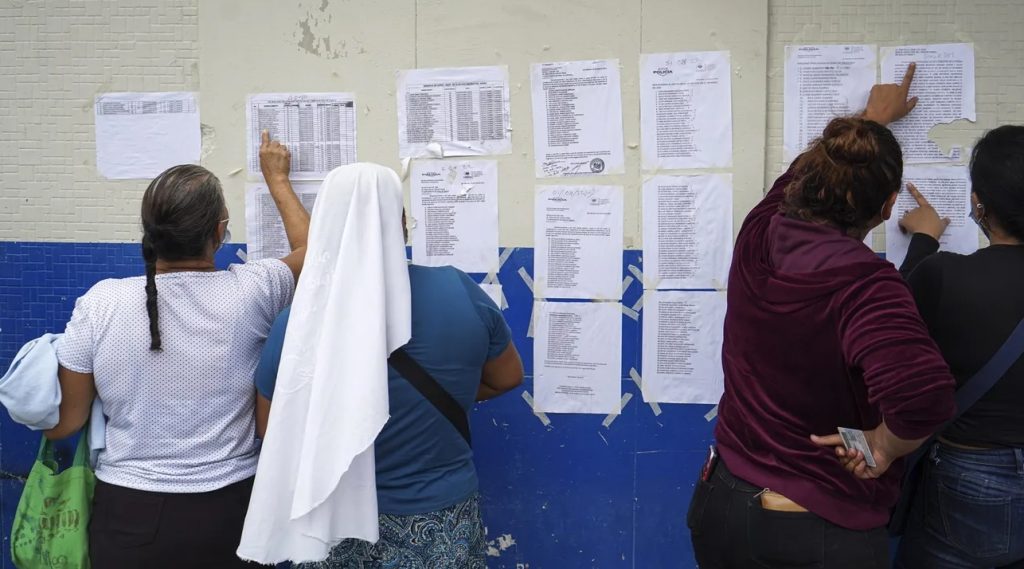
Human rights activists point out that in many cases, arrests are based on anonymous complaints or the appearance of suspects, and in poor areas, detentions are effectively carried out according to quotas set by the police leadership. At the same time, it is extremely difficult for innocent people to regain their freedom once they have been arrested.
Of the 85,000 arrested, only about 8,000 (as of the end of 2024) were eventually released. These were mainly people who, during further checks, showed no obvious signs of links to gangs, such as tattoos or previous convictions. In fact, the authorities apply the principle of presumption of guilt to those detained. At the same time, according to human rights defenders, prisoners are regularly subjected to torture in prisons. Since the beginning of the state of emergency, more than 300 people have died in custody, most of these deaths were violent.
As for the CECOT complex itself, since the prison was put into operation, not a single person has been released from there (at least officially), as promised by the authorities. At the same time, the criteria for transfer to this prison remain extremely opaque: it is done on the basis of decisions by the Ministry of Justice, often without a separate court ruling. Most of those transferred there are people who have been identified as active members of MS-13 or Barrio 18, but it is also possible to end up there simply for disciplinary offences in another prison or as part of another show of force by the authorities.
In 2024, the BBC told the story of one of the CECOT prisoners, José Duval Mati, a truck driver who was arrested during a raid in 2022. His trial, along with 350 other detainees, lasted only a few minutes. He was sentenced to six months in prison with the possibility of indefinite extension.
A few months later, the case was reviewed, Mata was found not guilty, and the court ordered his immediate release, but he was re-arrested at the prison gates. A year later, another judge issued a second ruling for his release, but it was never enforced. Moreover, Mata found himself in CECOT prison under unclear circumstances.
A BBC correspondent personally told President Bukele about Mata’s case when interviewing him, and later sent the case materials at the request of his office and reminded him about it several times in conversations with the vice president. However, the prisoner, who had been found innocent twice, was never released. It is not known whether he is alive or what has happened to him.
In ten years, El Salvador has gone from being the country with the highest murder rate per capita to one of the safest countries in this regard. At the end of 2024, there were 1.9 murders per 100,000 people.
However, this trend began even before President Nayib Bukele declared war on the gangs. From a record 107.6 murders per 100,000 people in 2015, by 2019 (when Bukele came to power) it had fallen to 38.5, and by the end of 2021 (before the state of emergency was declared) it stood at 17.3 – already below the regional average.
There were many reasons for this trend, including the actions of previous governments, which combined increased police operations with local informal agreements with gangs, and the growth of communities fighting gang influence at the local level through active work with children and young people. Critics argue that Bukele’s extraordinary measures have merely ‘privatised’ a positive dynamic that began without his involvement.
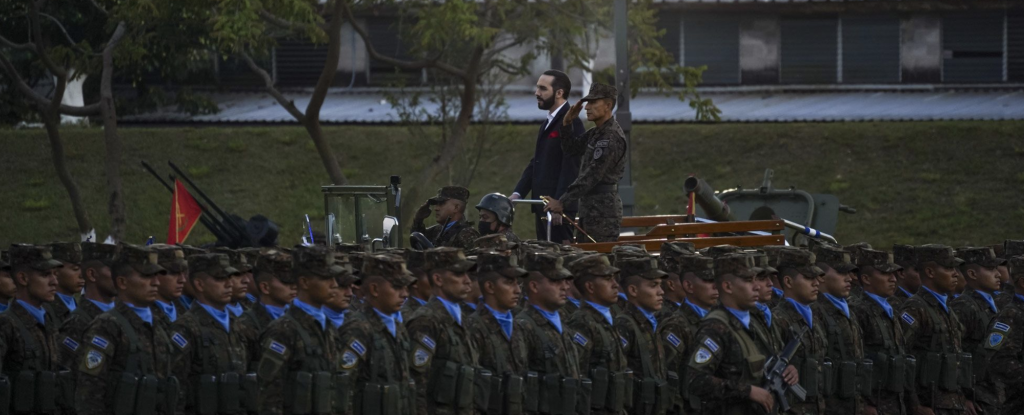
However, the vast majority of Salvadorans credit him with bringing security to the streets and seem willing to tolerate restrictions on rights and freedoms and the risk of arbitrary arrest. In February 2024, Nayib Bukele won the presidential election with 85% of the vote, and his party won 54 of the 60 seats in parliament.
*******************************************
MS-13: Як сальвадорська вулична банда стала одним з провідних політичних акторів сучасного світу?
Десять років тому Сальвадор був найнебезпечнішою країною в світі. Влада оголосила війну вуличним і в’язничним бандам – і рівень вбивств впав у 50 разів. До в’язниць відправили 1,3% населення країни. Багато хто потрапив туди без суду – і без надії коли-небудь вийти на свободу.
У лютому 2025 року адміністрація президента США Дональда Трампа уклала угоду з Сальвадором про висилку до Сальвадору мігрантів і злочинців, незалежно від їх громадянства (в тому числі і громадян США). Сальвадор ще в середині нульових був країною з найвищим рівнем вбивств у світі, проте за десять років владі вдалося знизити цей показник у 50 разів – не в останню чергу завдяки вкрай жорсткій політиці, що включає масові облави, арешти без суду і затримання на підставі одного лише зовнішнього вигляду.
Першопричини високого рівня злочинності та величезного впливу бандитських угруповань у Сальвадорі лежать у громадянській війні, яка тривала з 1979 по 1992 рік. Через бойові дії, в ході яких загинули понад 75 тис. осіб, більше мільйона сальвадорців стали біженцями. Багато з них опинилися в Лос-Анджелесі. У ті роки там був високий рівень злочинності, у багатьох бідних районах міста вулиці перебували під контролем етнічних банд, що складалися в основному з мексиканців або афроамериканців.
Приїхавши до Лос-Анджелеса, сальвадорці для захисту від бандитів створили свою етнічну угруповання, яке отримало назву Mara Salvatrucha, або MS-13. Досить швидко воно набрало вагу і незабаром активно включилося у війну з іншими угрупованнями за контроль над міськими кварталами і продаж наркотиків.
Одночасно сальвадорці також почали вливатися до складу угруповання Barrio 18. Створене ще в 1970-х роках, спочатку воно було виключно мексиканським, проте пізніше почало набирати вихідців з усіх країн Центральної Америки. Ці два угруповання стали непримиренними ворогами на вулицях Лос-Анджелеса.
Після закінчення громадянської війни в Сальвадорі США почали депортувати сальвадорців на батьківщину. В першу чергу влада намагалася вигнати людей, пов’язаних з вуличною злочинністю. Багато учасників MS-13 і Barrio 18 були вислані. Як наслідок, тисячі злочинців опинилися в зруйнованій країні зі слабким урядом і слабкими силами правопорядку, де було мало перспектив реалізувати себе в мирному житті, зате було дуже багато зброї, що залишилася з часів громадянської війни.
Колишні бандити з Лос-Анджелеса, які мали серйозний досвід реального протистояння з владою та конкурентами, швидко взяли під свій контроль вулиці. Зростанню угруповань сприяло активне вербування в них дітей, починаючи з десятирічного віку.
До нульових років кількість активних членів MS-13 і Barrio 18 оцінювалася приблизно в 10 тис. тисяч у кожної, що становило близько 0,5% всього населення Сальвадору.
Ще кілька десятків тисяч людей, не входячи в банди, надавали їм допомогу. Угруповання в протистоянні один з одним за ресурси і територію відрізнялися крайньою жорстокістю – навіть у порівнянні з мексиканськими картелями і угрупованнями з сусідніх країн.
У нульові та десяті роки влада Сальвадору вела боротьбу з бандами найрізноманітнішими методами. Вони віддавали перевагу масовим арештам і посиленню покарань за зв’язки з угрупованнями, однак на це банди відповідали ще більшим насильством на вулицях. Кількість вбивств у Сальвадорі в нульові роки не опускалася нижче 50-60 на 100 тис. населення.
Періодично уряд намагався домовитися зі злочинцями. Наприклад, у 2012 році влада за посередництва католицької церкви уклала неофіційне «перемир’я» з MS-13 і Barrio 18: в обмін на послаблення режиму утримання лідерів банд у в’язницях та інвестиції в неблагополучні райони угруповання пообіцяли припинити вбивства.
Рівень насильства дійсно впав, кількість вбивств знизилася в 2-3 рази, проте на практиці бандити використовували послаблення контролю з боку влади для зміцнення власного впливу. У 2014 році на тлі міжнародного тиску і неоднозначного ставлення всередині самого Сальвадору «перемир’я» закінчилося. MS-13 і Barrio 18 відповіли на це найсильнішою хвилею насильства – у 2015 році рівень вбивств досяг 107,6 на 100 тисяч населення. Країна вийшла на перше місце в світі за цим показником.
У 2019 році президентом Сальвадору був обраний Найіб Букеле. Спочатку він намагався вирішити проблему злочинності, ведучи з MS-13 і Barrio 18 таємні переговори. Уряд знову обіцяв пом’якшити умови утримання у в’язницях і послабити тиск на лідерів угруповань.
Однак на тлі критики, викликаної фактами таємних переговорів, Букеле різко змінив стратегію. Приводом для цього стали події в березні 2022 року, коли за три дні в країні було вбито 87 осіб. Влада ввела режим надзвичайного стану (спочатку — на місяць, але з того часу він продовжувався вже понад 30 разів), після чого оголосила про початок безпрецедентної кампанії, яка за своєю жорсткістю багаторазово перевищувала всі попередні спроби вирішити питання силовим шляхом. Як наслідок, до початку 2023 року було заарештовано понад 60 тис. осіб.
Режим надзвичайного стану дозволив обмежити право підозрюваних у причетності до банд на захист і таємницю листування, а також затримувати їх без суду на 15 днів за формальними підставами (а часто і зовсім без них).
У серпні 2022 року Букеле заявив про будівництво нової в’язниці на 40 тис. ув’язнених. Вона була готова менш ніж за півроку. Саме ця в’язниця стала символом нової війни влади з бандитськими угрупованнями. Ані в Сальвадорі, ані деінде в світі до того часу не будували в’язниць з таким високим рівнем безпеки. Влада неодноразово запевняла, що звідти неможливо втекти, і наголошувала, що нікого з ув’язнених, які туди потрапили, ніколи не планують випускати на свободу: на думку уряду Букеле, всі, хто туди потрапив, повинні залишатися там до кінця життя.
В’язниця, яка отримала офіційну назву Центр утримання терористів (Centro de Confinamiento del Terrorismo, CECOT), розташована в малонаселеній гірській частині в центрі Сальвадору. Площа самого комплексу становить 23 гектари; ще 140 гектарів прилеглої території перебувають під постійним наглядом. Комплекс являє собою прямокутник, оточений 11-метровими бетонними стінами з колючим дротом і датчиками руху. Всередині на момент відкриття знаходилися вісім ангарів з камерами, огороджених власними стінами.
Спочатку в’язниця була розрахована на 20 тис. осіб, пізніше місткість збільшили до 40 тис. Скільки зараз у в’язниці ув’язнених – невідомо. Востаннє влада офіційно називала їхню кількість (14532 особи) у червні 2024 року, пізніше точні цифри не розкривалися нібито з міркувань безпеки. У квітні 2025 року начальник в’язниці говорив, що кількість ув’язнених «наближається» до максимально можливої.
Ув’язнені утримуються в загальних камерах, де можуть перебувати близько півтори сотні осіб. У кожній камері – ряди чотириярусних ліжок, а також дві раковини і два отвори в підлозі. Принципове нововведення влади – членів конкуруючих банд розподіляють по камерах у випадковому порядку. Всі ув’язнені носять однакові білі шорти і футболки, кожні п’ять днів їх голять наголо.
У камері ув’язнені проводять 23,5 години на добу, упродовж яких вони можуть тільки стояти або сидіти на ліжках. Ніколи – навіть на час сну – там не вимикають світло, камери перебувають під цілодобовим відеоспостереженням. На півгодини ув’язнених щодня виводять у загальний коридор, де вони за командою роблять фізичні вправи або слухають проповіді священика. Меж ангара вони не залишають – президент Букеле окремо підкреслював, що злочинці не побачать «жодного променю сонця».
На камеру в півтори сотні чоловік видають по дві Біблії, більше ніяких предметів там немає. Ув’язненим не можна мати будь-які особисті речі, в тому числі книги, письмове приладдя або папір. Розмови самі по собі не заборонені, але за спроби встановити ієрархію або передавати повідомлення всередині блоку слідують покарання.
Щодня ув’язнені отримують одну і ту ж їжу. Це рис, макарони або бобові, а також вода і тортильї. М’яса їм ніколи не дають – як пояснюють власті, це робиться навмисно, щоб уникнути розмов про те, що бандити за державний рахунок харчуються краще за звичайних громадян. Вся їжа упакована в пластикові контейнери, і їдять її руками, адже столові прибори заборонені.
Консультації з адвокатами проводяться в окремих приміщеннях в тій же будівлі; звідти ж ув’язнені за допомогою відеозв’язку беруть участь у засіданнях суду. Контакти із зовнішнім світом вкрай обмежені. Формально ув’язнені мають право на листування, проте на практиці такі дозволи видають дуже рідко, всі листи проходять сувору цензуру, і часто в результаті їх просто не відправляють адресату. Особисті візити родичів іноді дозволяють у виняткових випадках – наприклад, якщо ув’язнений тяжко хворий або знаходиться при смерті. Офіційно це обґрунтовують необхідністю виключити передачу інформації від лідерів банд на волю.
Взаємодія ув’язнених з охороною також зведена до мінімуму. Двері камер відкриваються виключно з командного пункту, який знаходиться в окремій будівлі. У в’язниці кілька сотень охоронців, а також військових і поліцейських, які чергують зовні. Всі вони проходять ретельний огляд на початку і в кінці зміни.
За недотримання розпорядку ув’язнених відправляють в одиночну камеру на термін до двох тижнів. Там вони сидять в повній темряві – єдиним джерелом світла є отвір в стелі діаметром в кілька сантиметрів. У камері є бетонна раковина, туалет і бетонна плита в якості ліжка. Їжу тим, хто потрапив до карцеру, доставляють через щілину в дверях.
Також у в’язниці застосовуються колективні покарання: за порушення розпорядку одним із ув’язнених усій камері, наприклад, можуть обмежити кількість прийомів їжі.
Загалом в рамках війни з бандами за три роки влада заарештувала понад 85 тис. осіб (1,3% населення Сальвадору). Три чверті цих арештів відбулися в перші місяці дії режиму надзвичайного стану, ще до будівництва в’язниці CECOT.
Правозахисники вказують, що в багатьох випадках арешти засновані на анонімних скаргах або на зовнішньому вигляді підозрюваних, а в бідних районах затримання фактично проводять за принципом «квот», що спускаються керівництвом поліції. При цьому повернутися на свободу невинним людям, якщо їх вже заарештували, вкрай складно.
З 85 тисяч заарештованих лише близько 8 тис. тисяч (станом на кінець 2024 року) в результаті були звільнені. В основному це були люди, у яких під час подальших перевірок не виявили жодних явних ознак зв’язків з бандами – наприклад, татуювань або минулих судимостей. Фактично щодо затриманих влада застосовує принцип презумпції винуватості. При цьому у в’язницях, як вказують правозахисники, ув’язнені регулярно піддаються тортурам, з початку дії надзвичайного стану в ув’язненні померли понад 300 осіб, більшість з цих смертей мали насильницький характер.
Що стосується безпосередньо комплексу СECOT, то з моменту введення в’язниці в експлуатацію звідти (у всякому разі, офіційно) не випустили взагалі жодної людини, як і обіцяли власті. При цьому критерії переведення до цієї в’язниці залишаються вкрай непрозорими: це робиться на підставі постанов міністерства юстиції, часто без окремого судового рішення. В основному туди дійсно переводять людей, яких визнали активними учасниками MS-13 або Barrio 18, але також туди можна потрапити просто за порушення дисципліни в іншій в’язниці або в рамках чергової показової акції влади.
У 2024 році BBC розповідала історію одного з ув’язнених CECOT Хосе Дюваля Мати, водія вантажівки, якого заарештували під час облави в 2022 році. Суд над ним і ще 350 заарештованими тривав лише кілька хвилин. За підсумками він отримав півроку в’язниці з можливістю необмеженого продовження строку.
Через кілька місяців справу було переглянуто, Мату визнали невинуватим, і суд постановив негайно звільнити його, проте біля воріт в’язниці його знову заарештували. Ще через рік інший суддя виніс повторне рішення про його звільнення – проте воно так і не було виконано. Більш того, Мата за незрозумілих обставин опинився у в’язниці CECOT.
Кореспондент BBC особисто розповідав про справу Мати президенту Букеле, коли брав у нього інтерв’ю, а пізніше надсилав матеріали справи на запит його апарату і кілька разів нагадував про неї в розмовах з віце-президентом. Однак ув’язненого, якого двічі визнали невинним, так і не звільнили. Чи живий він і що з ним відбувається, невідомо.
За десять років Сальвадор з країни з найвищим рівнем вбивств на душу населення перетворився на одну з найблагополучніших країн у цьому відношенні. За підсумками 2024 року там фіксували 1,9 вбивства на 100 тисяч осіб.
Такий тренд, однак, почався ще до війни з бандами, оголошеної президентом Букеле. З рекордних 107,6 вбивств на 100 тисяч осіб у 2015 році вже до 2019 року (коли Букеле тільки прийшов до влади) він опустився до 38,5, а за підсумками 2021 року (перед введенням надзвичайного стану) становив 17,3 – і це вже було нижче середнього значення по регіону.
У цього тренду було багато причин, серед яких і дії попередніх урядів, що поєднували в собі посилення поліцейських операцій з локальними неформальними домовленостями з угрупованнями, і зростання числа спільнот, які борються з впливом банд на місцевому рівні шляхом активної роботи з дітьми та молоддю. Критики зазначають, що Букеле своїми надзвичайними заходами лише «приватизував» позитивну динаміку, яка почалася без його участі.
Проте, переважна більшість сальвадорців вважають саме його заслугою безпеку на вулицях і, схоже, готові миритися з обмеженнями прав і свобод та ризиком довільного арешту. У лютому 2024 року Букеле виграв президентські вибори, набравши 85% голосів, а його партія отримала 54 з 60 місць у парламенті.